

Hi all — it’s been a while. When I paused Good Tinker back in 2022, the subtitle was “but only for a moment!” That moment turned into a few years of a very full day job. I’m starting it back up, and I’m glad to be back in your inbox.
I left my role at RTI International in June of this year, and I’ve been a lot busier than I expected.
What started as my plan to settle into a new house (in a new city) and carve out time for side projects and hobbies quickly turned into a few consulting engagements around AI and tech strategy that I couldn’t say no to — and I’m glad I didn’t, honestly.
With the changing tech and AI landscape, what’s been interesting to me is that in some ways I’m still asking the same questions I asked teams 10 years ago, which is essentially some version of “what would you say it is that you do here…”
In many ways, teams are being sent into a tailspin around AI — the opportunities, the FOMO, the pressure to do something. But there’s a part of it that’s incredibly refreshing: it’s forcing teams to confront fundamental questions about what they do, why they do it the way they do, and what their underlying business model really is.
It’s a forcing function for teams to rebuild around the first principles of their organizations.
That question is never an easy one for most orgs. AI doesn’t make it any easier to answer, believe it or not. But it does now make it impossible to avoid.
One of the tricks I’ve learned over the years is to force the question: define the outcome you want to achieve without invoking technology (I picked this up in a grad school seminar at Michigan from Kerry McNamara, at the time a World Bank agriculture specialist). It’s surprisingly difficult. Our minds jump immediately to the app, the workflow, the dashboard, the automation that will solve everything. It’s much harder to realize that what you’re most often looking for is actionable information, a real change in how people work, or accountability and a paper trail.
That habit got reinfored in the field long before AI was part of the conversation. Going back to my field work as a researcher in Madagascar, I spent a lot of time trying to understand the technology tools and gadgets people bought and sold in local markets, and how they prioritized repair and autonomy over nearly everything else. People at the time were choosing the Nokia-equivalent phone because it was incredibly resilient and easy to repair. Nobody was shopping for the most advanced gadget. They wanted to know whether they could keep it running, fix it themselves, and make it do what they needed.
I had first-hand experience doing this last year at RTI. We had tools and platforms scattered across the organization, built and owned by various teams over the years — some flagship tech stacks, others abandoned one-off builds — but no centralized tracking of them, much less a strategy for growing, maintaining, offboarding, or abandoning them. My team and I developed that strategy for what ended up being over 300 tools (!). It wasn’t simply a matter of “let’s get AI in here to solve this”; it was about “how is this tool critical to our growth strategy, or to our clients’ portfolios?” In the process, we cut tool approvals from months to days (probably more impactful than any single tool growth strategy).
What tends to surprise people is that once you get to the real problem within teams, the answer often isn’t AI at all.
Sometimes it’s looking at the process workflow and deleting a step nobody remembers adding. Sometimes it’s retiring three tools that do the same thing. Very often it’s finally fixing the data everyone has been complaining about for years.
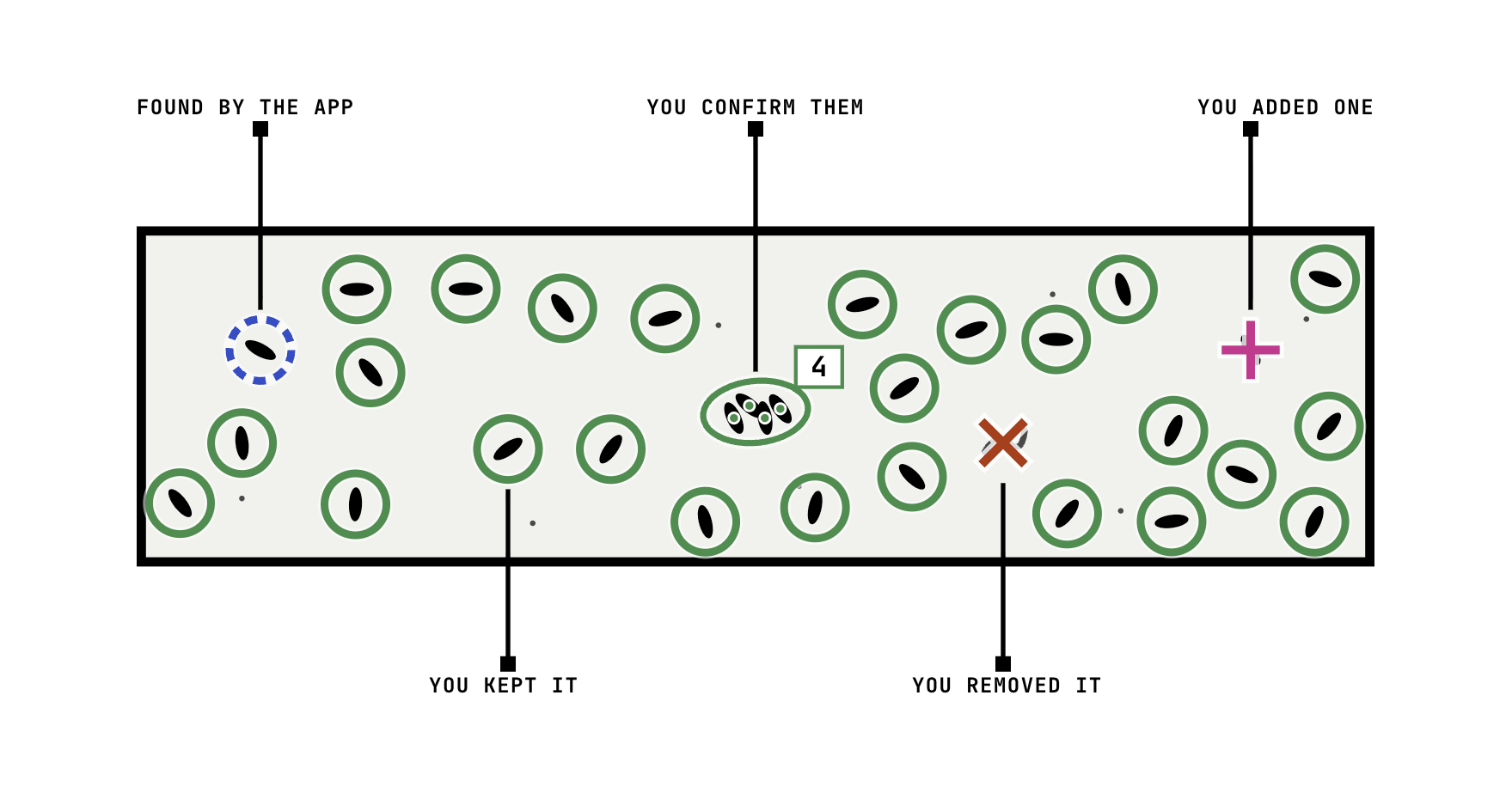
I’ve been relearning the same lesson from the builder’s side of the table, too. A few years ago at Abt, I led the build of MECVision, a computer vision app that cut manual mosquito egg counting time by 90% in public health programs, and getting it from concept to production took a cross-functional team. This summer I’ve been rebuilding it as Ovicounter AI as a solo developer, but with infinitely more tools at my disposal. Same with my 3D printing design work, where I now sketch out a part and have an AI drive the CAD software to model it. In both cases, the code (or the model) isn’t the hard part anymore. Knowing the problem is — which is exactly the question AI is forcing every team to answer.
So that’s what I’ve been up to. I’m taking on a few more advisory engagements, and I’m being choosy about what my next big build looks like. If your organization is in the middle of this conversation — or should be — I’d love to compare notes. Reach out at gabrielkrieshok.com, email, or via LinkedIn.
Keep tinkering,
Gabriel